
The $3 Trillion
Corporate Advocacy
PlayBook
Africa’s 10× CAMPs
A field-defining framework for mobilising corporate advocacy to unlock Africa’s $3 trillion clean energy opportunity — anchored in real places, real sectors, and real actors.
Opportunity
Private Capital
Leapfrog
Capacity Target
Multiplier
& Strategy
The Core Strategy — The Ultimate Energy Endgame
- Africa’s $3 trillion green-industrial future is within reach — achievable through an economic 10× GDP leapfrog.
- The missing 75% of this $3 trillion — the green NDC investment gap — can only come from the private sector.
- The critical unlock is deploying Corporate Advocacy Mobilisation Pioneers (CAMPs) collective impact to catalyse corporate resources and investments to fill this three-quarters gap.
- Gaining early traction through Five Priority Sectors across Africa’s Five Iconic Renewable Energy Zones (FIREZs).
- Then building continental momentum from there and beyond.
Six Dimensions of the $3 Trillion Thesis
Africa’s clean industrial investment opportunity reaches $3 trillion through 2030 and beyond — of which approximately 75 per cent must come from private capital.
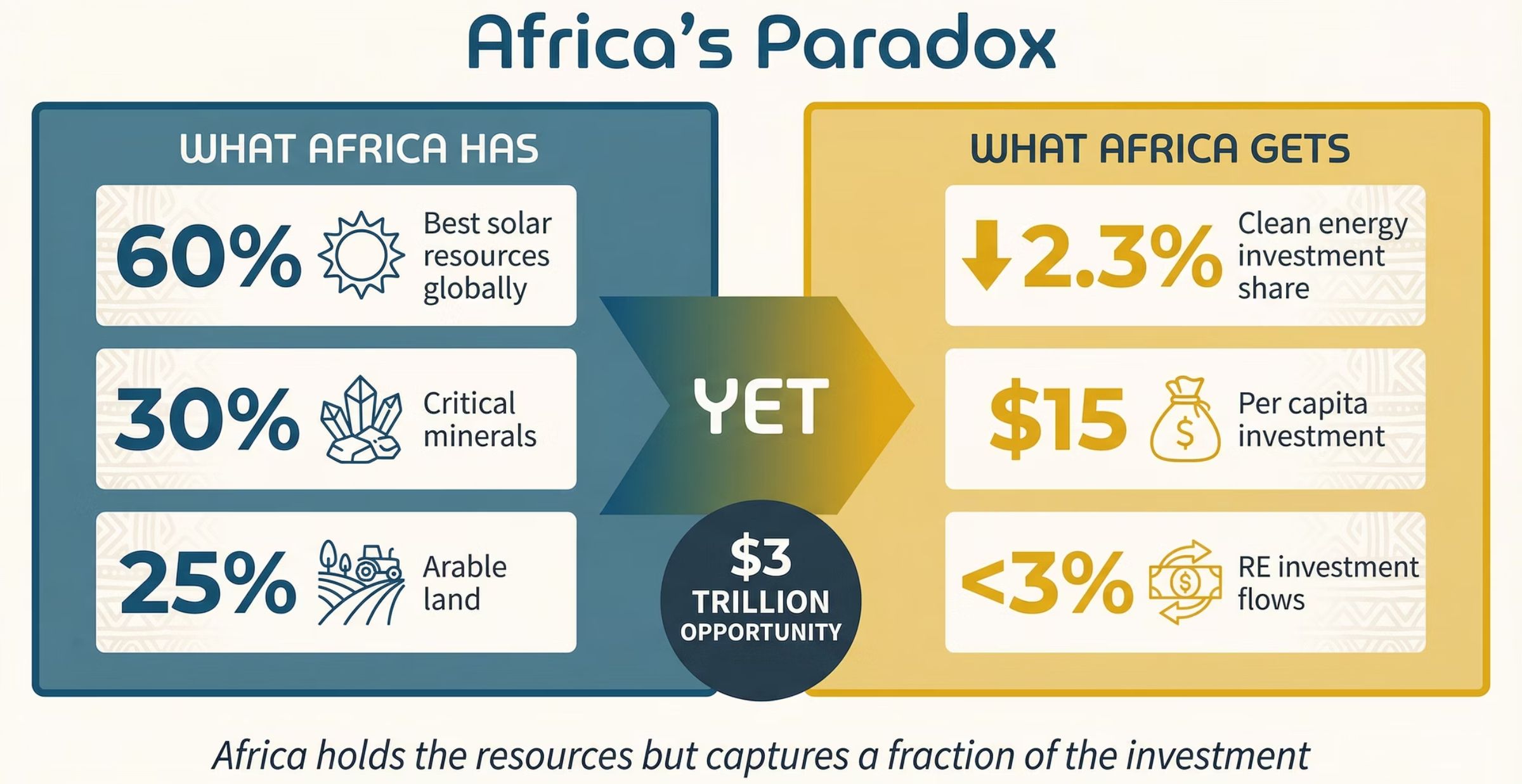
The continent holds 30% of global critical minerals and receives more solar radiation than any other, yet captures less than 3% of renewable energy investment.
Targeted green industrialisation can compress Africa’s development from 50–100 years to 20–40 years. Renewable jobs can scale from 0.3M to 8M — a 27× increase.
The barriers are not primarily technical or financial — they are institutional, relational, and political. Trust deficits and coordination failures obstruct corporate resources more than technology costs.
Corporate Advocacy Mobilisation Pioneering (CAMPing) — the systematic mobilisation of private sector voice, capital, and coordination capacity — emerges as the decisive factor.
This PlayBook provides barrier diagnostics, lever mechanisms, and deployment protocols — identifying Five Priority Sectors, Five FIREZs, and Seven Strategic Manoeuvres.
The Ten Strategic Proofs
Every number is sourced from institutional authorities — IEA, IRENA, African Development Bank, African Union, and BloombergNEF.
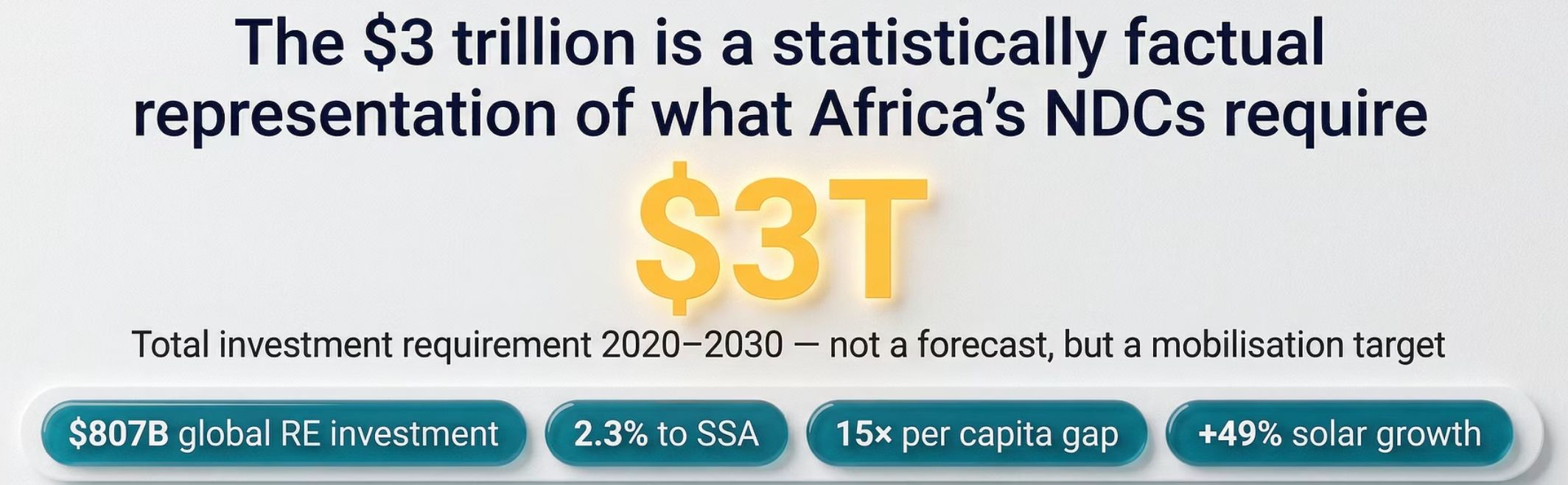
The $3 Trillion Threshold Target
Africa’s NDC-aligned clean energy industrialisation requires $3 trillion in investment through 2030 and beyond. This is not aspirational — it is the calculated threshold for transformative impact.
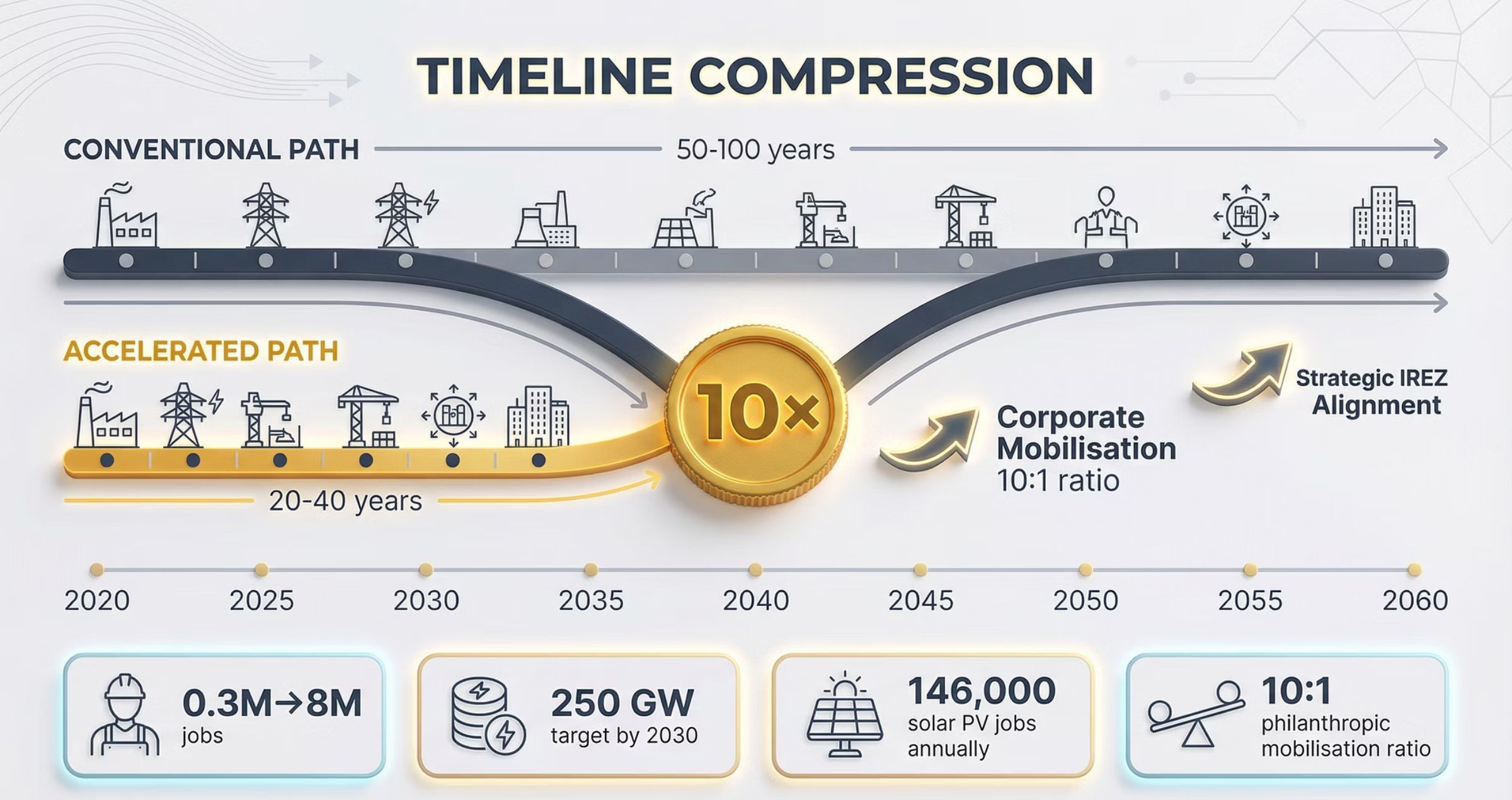
The 10× Compression Window
Africa can compress 50–100 years of conventional development into 20–40 years through targeted green industrialisation — leapfrogging the fossil-fuel development path entirely.
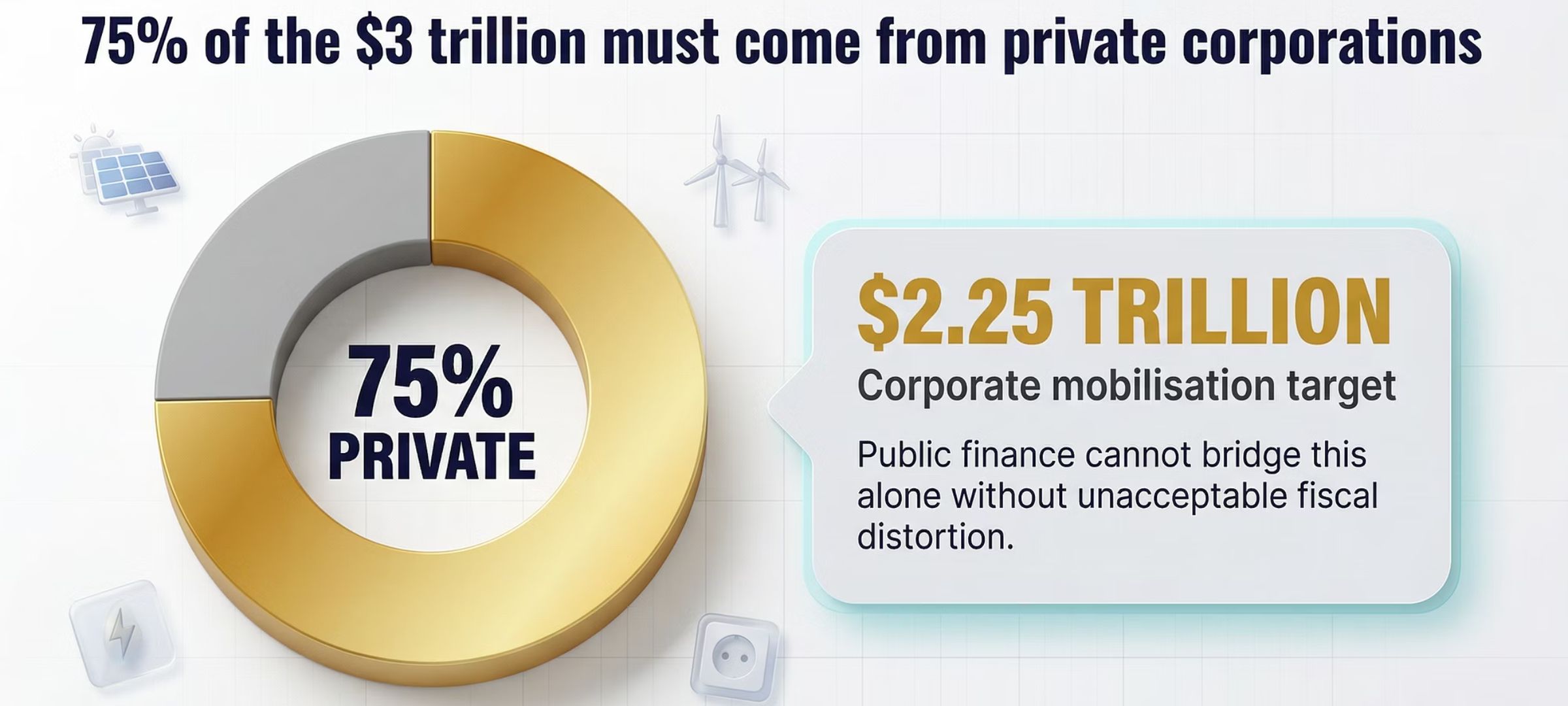
The 75% Private Sector Imperative
Three-quarters of Africa’s clean energy investment must come from the private sector. Public finance and development aid cannot close this gap alone.
The 250 GW Capacity Trajectory
The African Union targets 250 GW of installed renewable capacity by 2030 — a transformation that demands unprecedented coordination between public and private actors.
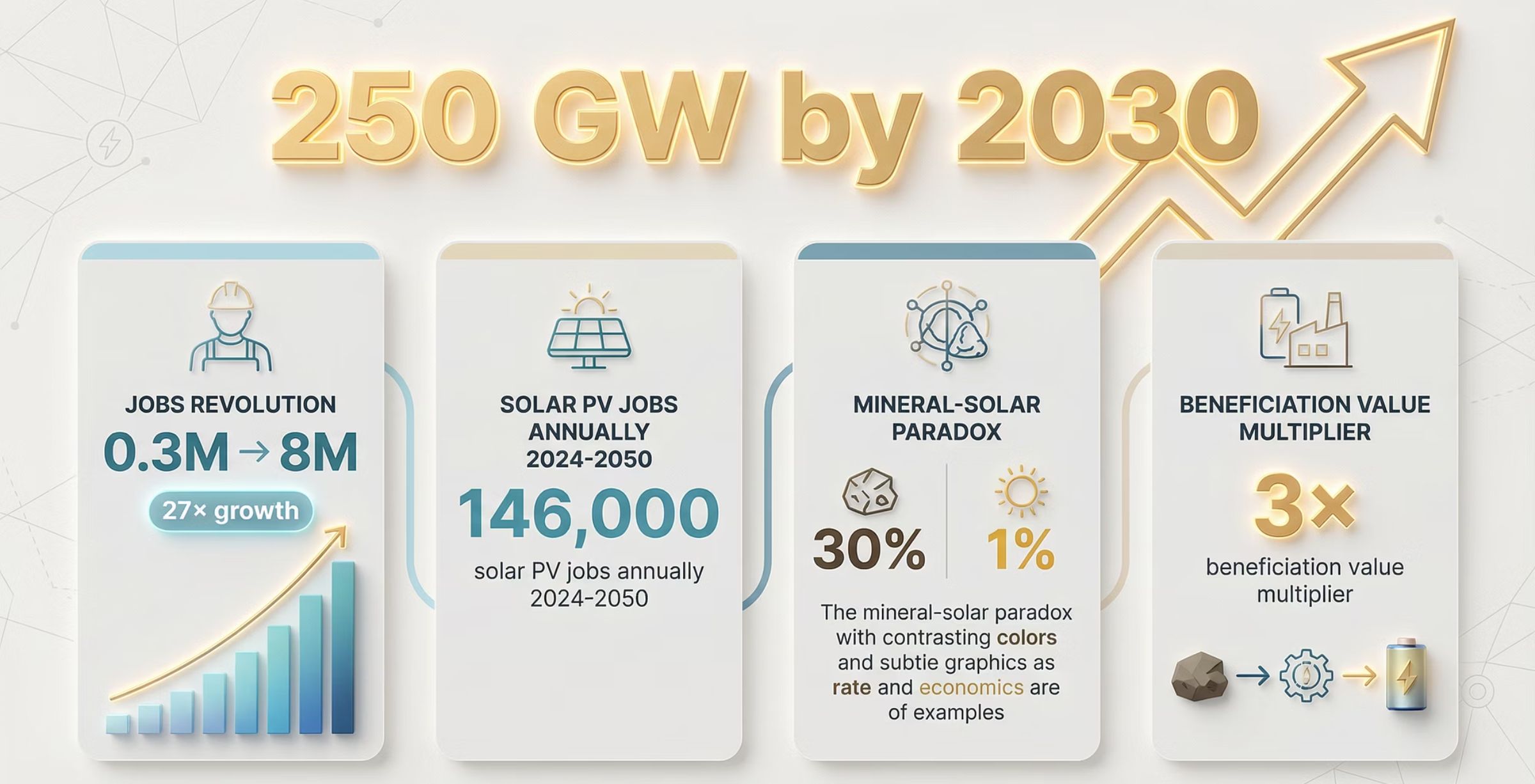
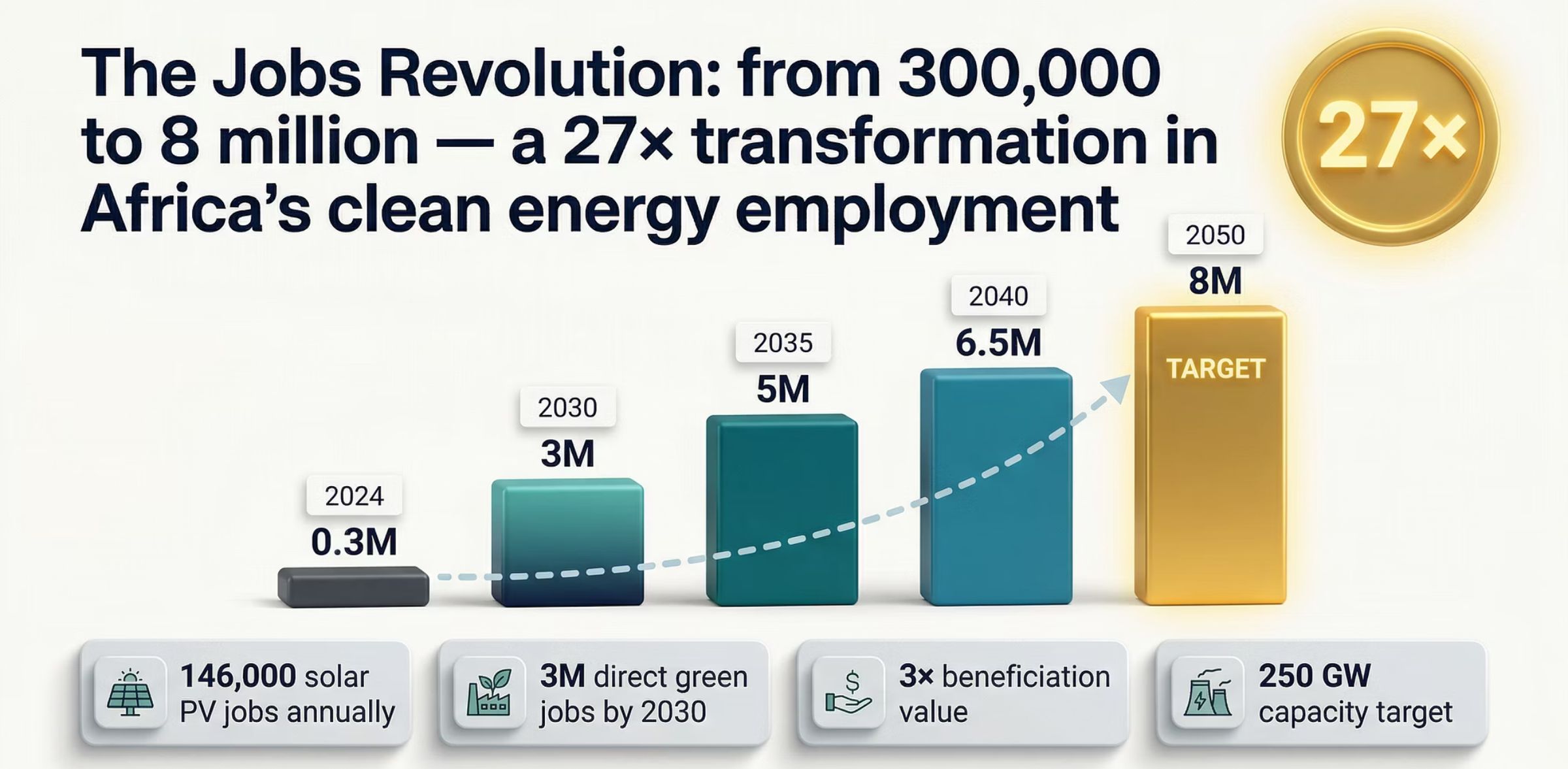
The 27× Employment Multiplier
Renewable energy jobs can scale from 0.3 million to 8 million across the continent — a 27-fold increase that transforms livelihoods at scale.
The Mineral-Solar Paradox
Africa holds 30% of the world’s critical minerals and receives more solar radiation than any other continent — yet captures less than 3% of global renewable energy investment.
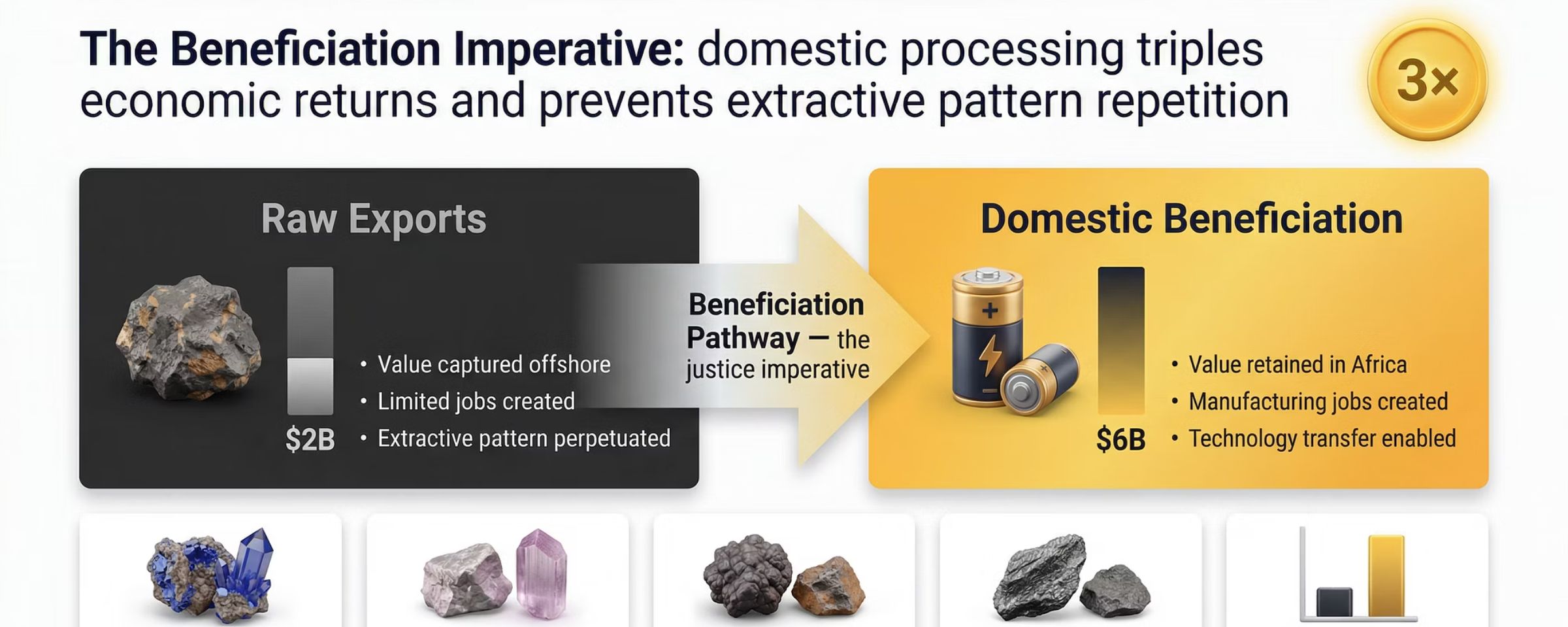
The Beneficiation 10× Multiplier
Processing raw minerals domestically rather than exporting them can multiply economic value by a factor of ten — the difference between extraction and industrialisation.
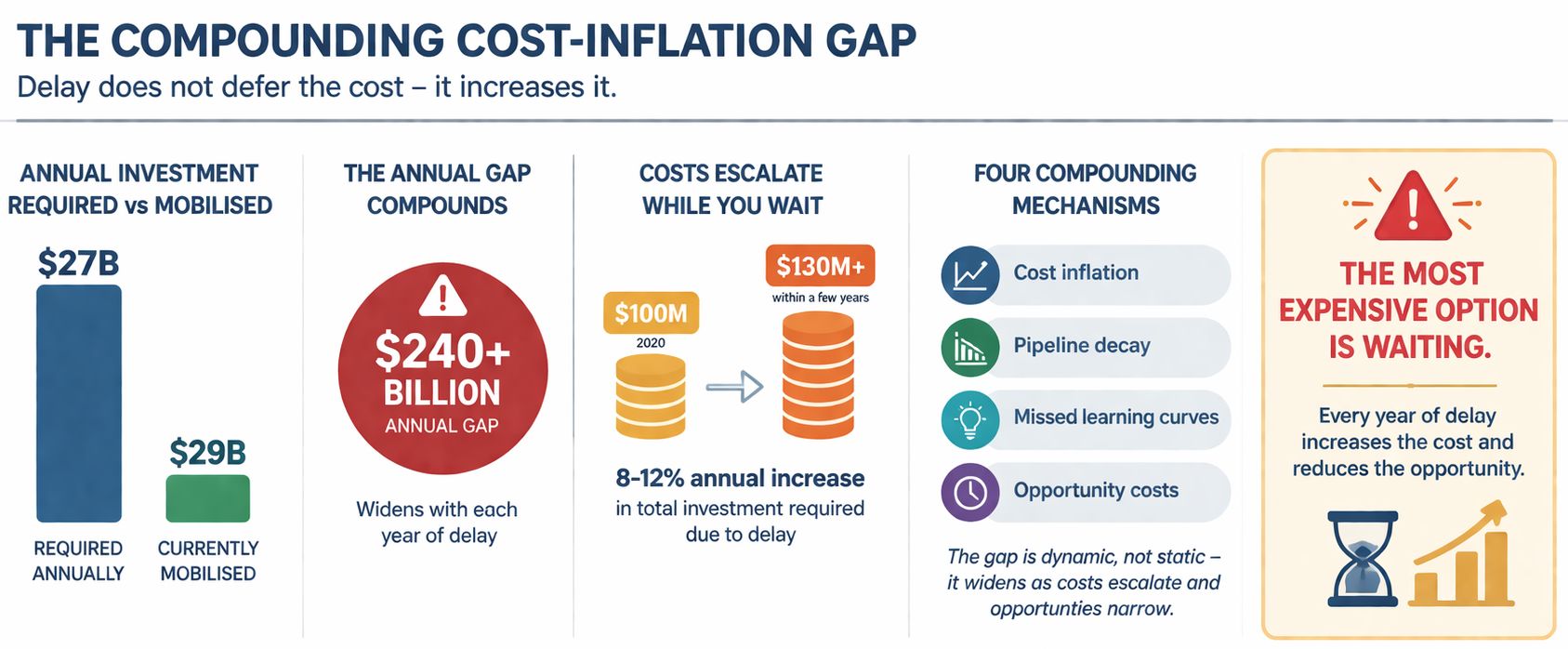
The Compounding Cost-Inflation Gap
Every year of delayed investment widens the cost gap — renewable technology costs decline while fossil infrastructure costs inflate, compounding the penalty of inaction.
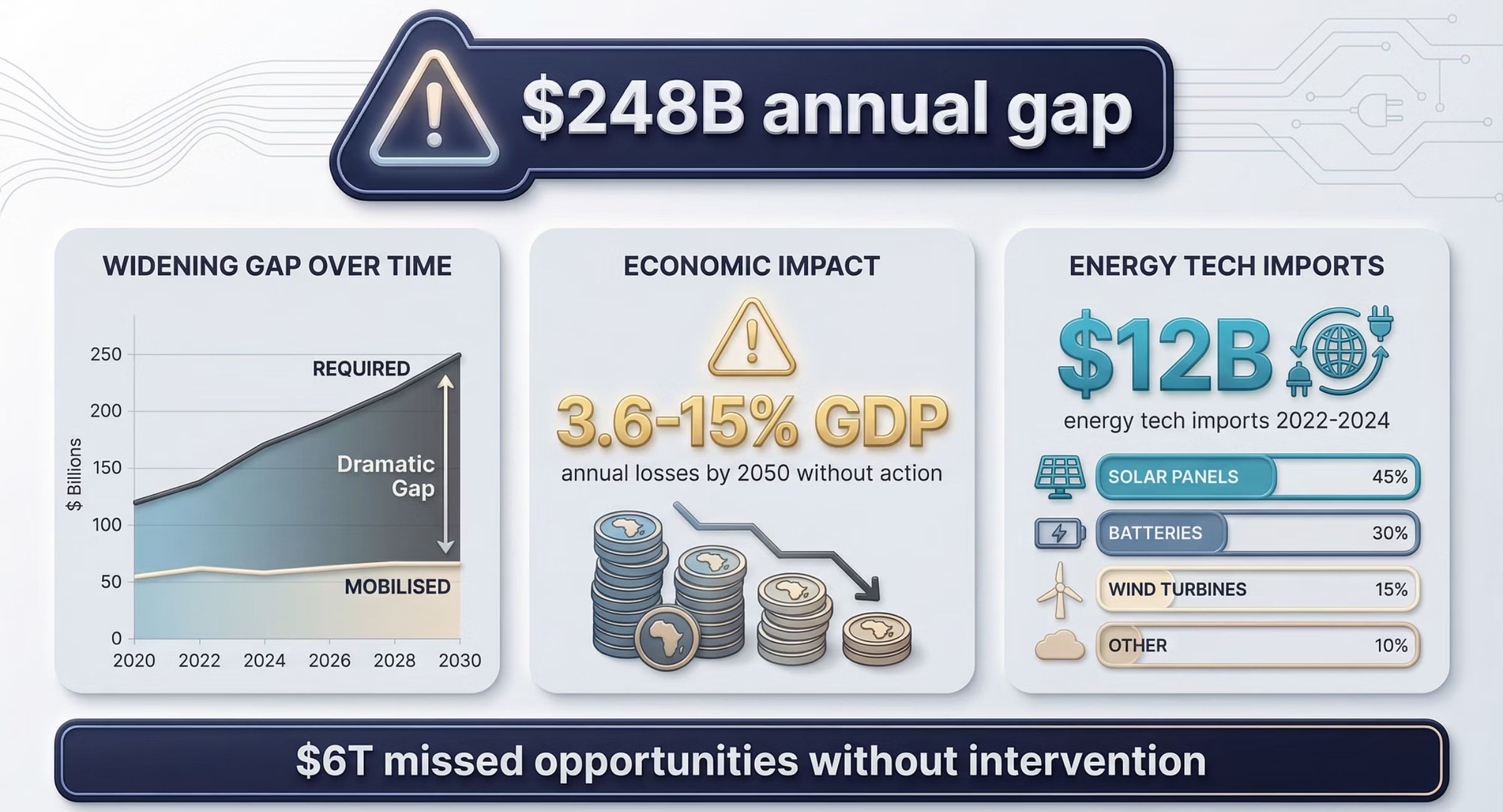
GDP Losses from Inaction
The economic cost of delayed clean energy transition compounds annually, eroding potential GDP gains and deepening the development gap with each passing year.
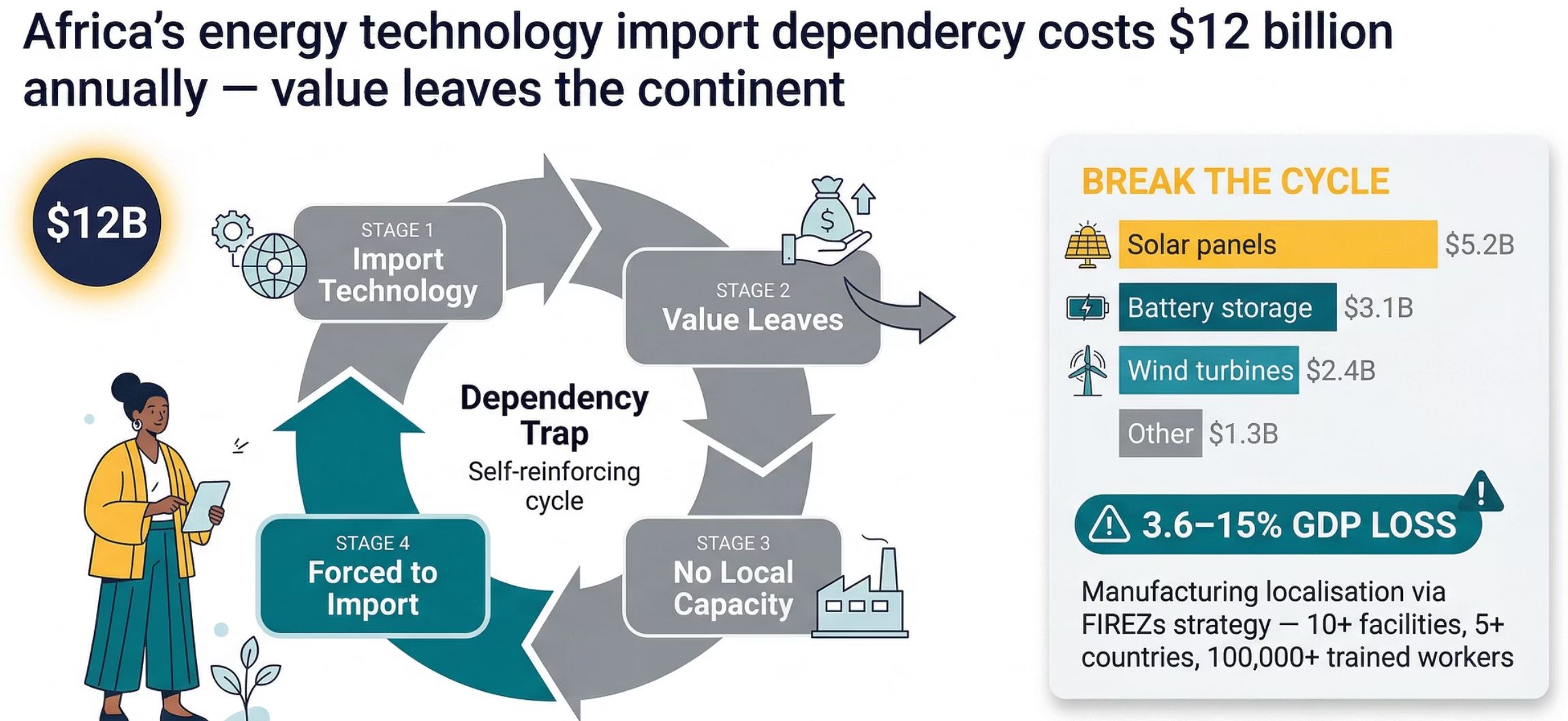
The Import Dependency Trap
Without domestic manufacturing and beneficiation, Africa risks swapping fossil-fuel dependency for clean-energy import dependency — a transition in name only.
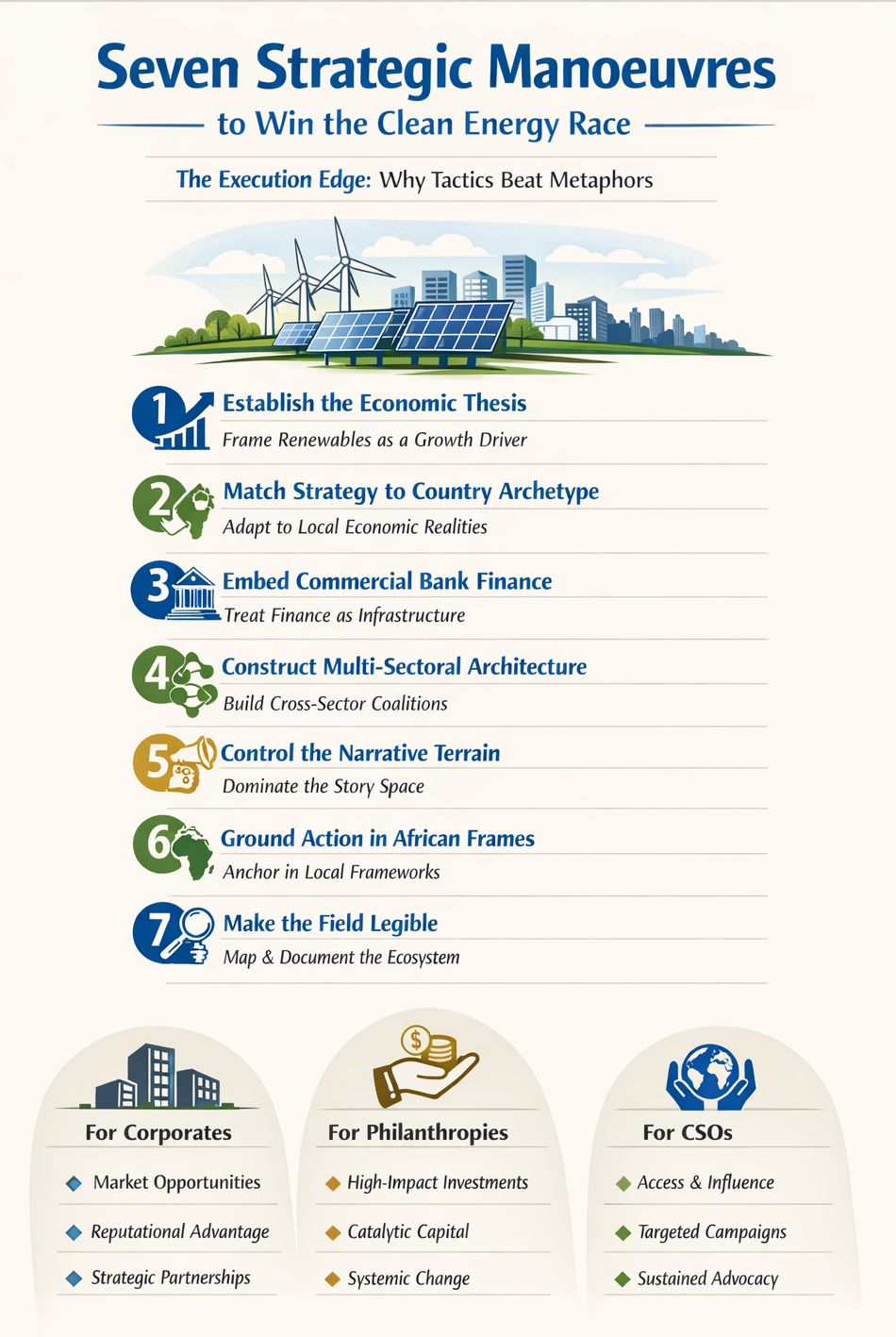
Seven Strategic Manoeuvres
The PlayBook’s operational framework — seven interlocking strategic manoeuvres that translate evidence into coordinated action across sectors and zones.
Read the Full PlayBook
A complete report of evidence-based strategy for Africa’s $3 trillion clean energy opportunity.